I recently made a roughly 55-minute long video talking about my background, why I’m making Shogun Exodus, why I think I can actually pull off something this ambitious, and how AI fits into all of it.
Fifty minutes is, I admit, a long time to listen to some random Danish guy walking around Tokyo talking about himself, so I thought it would probably make sense to write some of it down as well.
From the outside, Shogun Exodus probably looks like a pretty dramatic career change. I spent most of my professional life working in online marketing, SEO, YouTube, analytics and related fields, and now I’m suddenly making a fairly massive colony simulation, and to a lesser degree RPG, set in a far-future grimdark Japan-inspired world.
And if you think “how in the world is that connected?”, I getcha, but for me looking back it actually makes a lot of sense, and I see it more like the final culmination of skills I’ve acquired throughout my life.
I’ve spent most of my life bouncing between visual design, computers, automation, data, systems, software, games and various little projects where I tried to make one thing interact with another thing in some, often overly complicated, way.
I have experience in a lot of very different fields, and in fact a thing I have often talked with my bosses or managers where I worked in the past, was how I would be able to use more of my different skills, instead of often ending up specializing in one specific area.
Game development, and Shogun Exodus in particular, has gradually become the place where I can use almost all those skills at the same time.
I started with digital art when I was around 14

I started messing around with digital art and photo manipulation when I was around 14 years old. I’m 42 as of writing this, so me being 14 would be around 28 years ago – 1998.
At first I used PaintShop Pro because Photoshop was, from what I remember, something for filthy rich people. Eventually I moved over to Photoshop, which then became one of those pieces of software that I would continue using for the next couple of decades.
What was I making back then you might ask? Mostly Natalie Portman fan wallpapers, because I was (and am) a huge Star Wars nerd, and I had a massive crush on Natalie Portman (who doesn’t?).
This was also a slightly different time for digital art than today. There was still a surprisingly common attitude that making something on a computer somehow made it less legitimate than making it physically. Digital work wasn’t quite “real” art. It wasn’t quite “real” design. You could press Undo, after all, which apparently meant you were cheating. I specifically remember my dad taking prints of the wallpapers I had made with him to a parent-teacher meeting, and using them as examples of “how is this not considered artistic and creative work?”.
I ran into variations of that attitude when I was young, and later again when I started studying design. I remember the broader idea that digital work was easier because the computer was “just doing it for you”, and that somehow made the result less meaningful. “You just click a button”, “it’s just computer effects” etc. were pretty common sentences thrown my way.
I found that argument pretty crap back then, and unsurprisingly it has affected how I think about some of the arguments around AI today. Not because Photoshop and generative AI are necessarily the same thing, but simply because I’ve now spent close to 30 years hearing varying versions of “the computer helped, therefore what you made doesn’t count.”
We’ll get back to that.
At roughly the same time I was getting into digital art, I also started building websites. Mostly random things at first: fan sites, forums, little projects, experiments. Again, often Natalie Portman / Star Wars focused. Fun fact: for a while, I ran one of the most visited Natalie Portman websites and fan forums out there on the internet. Bet you didn’t know that! I think I was around 16 or 17 at the time.
While extremely commonplace in web development these days, things like “Templates” were a huge breakthrough back then – that you no longer needed to update every menu, on every page, manually every time you added something new. And as you’ll probably notice if you keep reading, the idea of “systems interacting within systems” is a thing that stuck with me a lot.
Photoshop pushed me into automation
By the time I was studying design, I started the Danish Design School back in 2007, Photoshop had become something I was extremely comfortable with. I made tutorials, sold tutorials, created commercial video courses, did photo retouching and graphic work, and also started making and selling Photoshop Actions.
Side note: once again I was often told I needed to learn to do “real art” or “real design” that wasn’t reliant on the computer.
If you don’t know, Photoshop Actions are basically little automated sequences. You record or define a series of operations, and Photoshop then performs those operations again automatically step by step at the click of a button. Sometimes they were fairly simple, but I also made much more complicated ones with lots of steps, conditions and dependencies.
Looking back, that is probably one of the first really clear examples of something that has followed me through almost everything I’ve done since. I like automation. I dislike repetitive uncreative work. I like figuring out how to make something complex into something a system can handle itself.
More specifically, I like figuring out how one action can trigger another action, which changes some piece of data, which affects another thing, which then produces another result.
At the time I obviously wasn’t thinking, “Ah yes, this will one day be useful when I make a simulation game.” I just didn’t want to manually do the same fifteen Photoshop operations over and over again if I could make the computer do 14 of them for me. Do it once manually, figure out how to do it automatically endless times after that.
And because I wanted people to actually find and buy the tutorials and Photoshop Actions I was making, I started learning online marketing, which ended up becoming most of my professional career.
Wild West SEO
Online marketing and SEO in the 2000s was quite a bit different from what it is today. A large part of it was essentially figuring out how much you could mess with Google before Google changed something and ruined whatever thing you’d just made.
You analysed links, keywords, ranking positions, page structures and search behaviour. You created experiments, looked at what happened, adjusted things, and tried to reverse-engineer a system where you could observe the output but never see the actual algorithm.
Once again, I also did a lot of automation.
At one point, way back in the day, I was running or experimenting with enormous automated networks of WordPress sites. I used tools such as uBot, which was essentially visual scripting for, primarily, web automation. I didn’t really know conventional programming at the time. I knew some HTML and a bit of CSS, but I absolutely could not sit down and build a serious application from scratch. What I could do was understand the logic of what I wanted to happen, though.
If this happens, do this. Take this value, store it here. Loop through these things. If this condition is true, do one thing; otherwise do something else. Open this page, extract this information, transform it and put it somewhere else.
Visual scripting let me build quite complicated automated systems without being particularly good at writing code. Cough cough automating the creation of 50,000 free wordpress blogs so I could link to my own website cough cough (no, that didn’t produce particularly good results lol).
And that way of thinking turned out to be extremely transferable later.
SEO spam = Game development?
One of the slightly more ridiculous examples is text spinning.
If you’ve never had the pleasure of working in questionable old-school SEO, aka “Blackhat SEO” (which just meant “do what works, not what Google tells you to”) text spinning was basically a way of taking a sentence and filling it with alternatives so that software could generate lots of different versions of the same text. For what? For my 50.000 wordpress blogs, obviously!
You could write something like:
“{Hello|Hi|Greetings} {friend|traveller|stranger}” and the software would combine those options into different outputs like “Hello friend” and “Greetings traveller”.
Then you could put spins inside spins, inside other spins, inside more spins, and eventually create genuinely horrible monstrosities that could nevertheless produce enormous numbers of different articles. I ended up getting pretty advanced with that at one point.
Many years later I was playing Elite Dangerous (amazing in VR!), and one thing that bothered me was how lifeless a lot of the NPC interaction felt. I always thought “The game already knows so much about the characters and organisations I interact with. Like factions, reputations, locations, relationships, different economic situations, number of interactions, and so on, why not use basic text spinning to take all that information and use it to craft personalized conversations? It would be so easy!”.
If someone likes you, pull from one set of phrases. If they hate you, use another. If their faction is losing a war, then change X word in Y sentence. If you’re flying a particular ship, or you’ve recently helped their faction, or you’re carrying something relevant, include that.
Essentially: take all that structured data and feed it into a much more sophisticated version of the text-spinning logic I’d used years earlier.
That also became part of how I started thinking about NPCs in Shogun Exodus. If the game already knows a Servant’s personality, relationships, health, mood, skills, recent experiences and current situation, then ideally those shouldn’t just be values hidden somewhere in a database. They should affect what that person does and, where appropriate, what that person says.
So yes, one tiny part of the philosophical ancestry of Shogun Exodus is basically SEO spam.
Hey now, I never said this was going to be a glamorous origin story. This is on you as much as it is on me.
Finishing University

While all of this was happening, I was formally studying Visual Communication.
I got my Bachelor’s degree from the Danish Design School and later my Master’s from the Royal Danish Academy of Fine Arts, School of Design.
By the time I finished my Master’s, I had already been doing digital art and photo manipulation for something like fifteen years.
While I have quite a lot of not-so-nice-things to say about school, particularly their lack of understanding and skill in digital media, I’m not gonna lie and say I learned nothing. Producing dozens of 40-page design dossiers obviously teaches you things. I also happened to end up being quite good, and quite liking, abstract Design Theory (even considered getting a PhD in it! “Dr. Zeplin” has such a nice ring to it!).
I also did professional design work while studying, including work in Tokyo, and for a while I was creating Photoshop tutorials and educational material professionally.
That visual background is obviously extremely useful now. Having literally over 2 decades worth of experience in working with Photoshop is obviously a pretty massive advantage when making games.



It is also one of the big reasons Shogun Exodus is a 2D game. I have very little serious 3D modelling experience – I did mess around with 3DS Max and Vue d’Esprit back in the day as a teenager, but not very much (in large part due to the enormous render times even very simple 3D scenes took back then).
I do, however, have almost 30 years of experience manipulating 2D images. If I’m going to make something enormous largely by myself, leaning into the things I’m actually good at seems like the smart thing to do, you know?
Senior Online Marketing Consultant
Remember when I said I made tutorials and photoshop actions I tried selling online? When I finished university, I actually had more specialised knowledge about SEO and online marketing than I did about working as a conventional graphic designer.
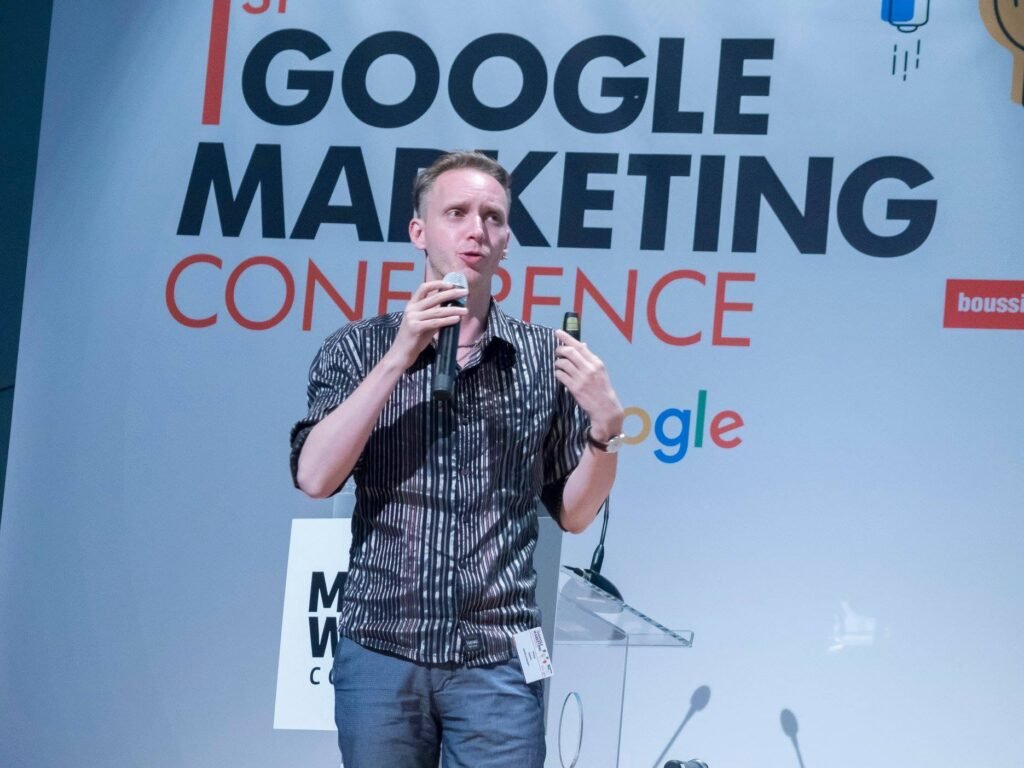
Long story short, I started working professionally as an SEO consultant and quite quickly became a senior consultant. Over the years I worked at agencies and companies including iProspect (ironically owned by the Japanese company Dentsu Aegis Network), Vita Media Group and Publicis Media, and worked with clients ranging from relatively small businesses to companies such as Bang & Olufsen, Mercedes-Benz, Huawei, SAS, Microsoft, Coca-Cola, Maersk and others.
Oh, and did I say I was a global expert in YouTube SEO and marketing?
This started fairly early in YouTube’s history, back around 2006. I’d already been using YouTube myself, including being the first Danish person to vlog from Japan, and I became increasingly interested in how the ranking and recommendation systems actually worked.
Basically I thought “Hey, YouTube has a Search field. There needs to be some sort of ranking algorithm that decides which thing ranks highest for a search. That ranking needs to be decided by some sort of factors. Surely I can figure out what those are?”

And so I became one of the first people in the world, back around 2012’ish, to release a “SEO For YouTube” video course online.
On top of that, I later built, together with freelance developers, my own YouTube analytics and ranking tools. I used those to run fairly large studies of the YouTube algorithm, including one involving millions of data points across tens of thousands of videos. (you might still be able to find remnants of it by searching for “Philip Zeplin Rankify YouTube” or similar)
That eventually led to me speaking about YouTube ranking factors and optimisation at conferences including VidCon and Google marketing conferences, as well as doing seminars and workshops for broadcasters and companies.
Again, on paper this doesn’t look much like game development. We’ll get there.
But I spent years doing things like trying to understand systems I couldn’t directly inspect, separating correlation from causation, figuring out why something had suddenly stopped working, analysing noisy data, building tooling where the existing tools weren’t good enough, and constantly testing assumptions against what actually happened.
That mindset transfers surprisingly well when you’re building a simulation game.
Game Development as a Hobby
Game development isn’t completely new to me either. I’ve actually been messing around with game engines for a fairly long time. As I said earlier, I did some early experiments with 3D software when I was younger, and around 2014 I started spending much more time in Unreal Engine.
I made maps, horror environments, little prototypes, procedural-generation experiments, basic AI systems and various things that could technically be called games if you were being generous.
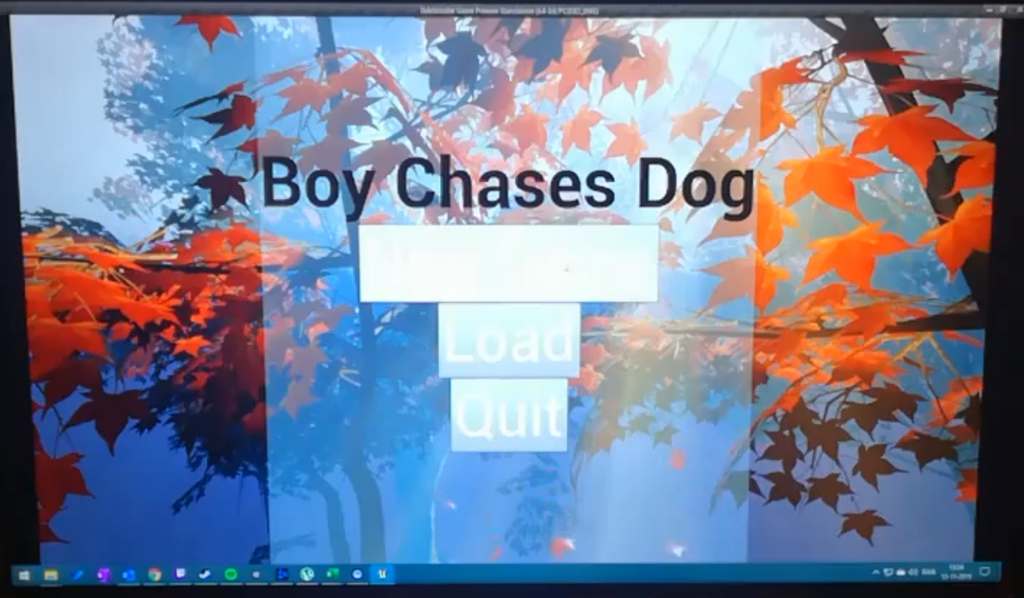
One example is that I made part of a platformer called “Boy Chases Dog”. Though at one point I made several playable levels before installing a Marketplace package that broke so much of the project that I didn’t understand how to fix it. Sucks, but that was a useful lesson in both dependencies and why blindly bolting large systems onto an existing project can be… not a good idea.
I also worked on a procedural survival-horror concept called “Get Out Of The Swamp”. For that I took a procedural dungeon-generation plugin (these days Unreal has its own procedural generation system, but it didn’t back then) and tried using it to generate much larger outdoor spaces instead. I built modular chunks of landscape and used those to procedurally assemble swamps, lakes and different biomes. My teen experience with making 3D worlds came in handy.
Where I ran into problems was optimization, it ran horribly. Another huge issue became the actual 3D models, their animations, their textures and so on. And more so, implementing actual gameplay mechanics instead of just building out the levels – Blueprints was, and is, I have to say, not for me. But the idea of taking relatively simple modular pieces and using systems to create much larger combinations became another recurring interest of mine.
This is also where a lot of the basic ideas for Shogun Exodus started appearing – NPCs with needs, “lives”, procedural towns, etc.
Eventually I moved towards simpler tools and experimented with TyrannoBuilder, where I could do more logic without dealing with the absolutely enormous complexity of a modern 3D engine. The Visual Scripting in TyrannoBuilder reminded me a lot of the way uBot worked back in the day.
That eventually led to a deliberately silly idea called Samurai Shiba Shinosuke, about a samurai Shiba Inu called Shinosuke (side note: over a decade ago I decided if I ever got a Shiba, which I desperately want, I would call him Shinosuke). The basic premise was a Shiba Inu, that was a samurai, going on quests, done in just the most dad-joke stupid ways. For instance, I considered everyone else being regular humans and talking normally, but Shinosuke only communicating in barks and everyone just acting as if that was normal.
Somewhere along the way that joke project gradually became more serious. And eventually it became one of the ancestors of Shogun Exodus.
I fucking love RimWorld
I’ve spent several thousand hours playing RimWorld. Literally. So yes, Shogun Exodus is very obviously inspired by it.
What I love about RimWorld isn’t simply building a base. It’s the systems. The planning. The procedural nature. And perhaps most of all, the simulation behind all this.
But there were also things I kept wanting to see pushed further. RimWorld is intentionally visually abstract. Pawns are extremely simple graphical representations, which is part of why the game can support such an enormous amount of content, but it also means that a lot of what happens to them exists mainly as text, icons, menus and numbers.
I wanted something where more of the consequences were visible directly on the characters.
If someone changes clothes, gets injured, equips something, becomes sick, loses part of their body, or simply looks very different from someone else, I want more of that difference represented visually.
The same applies to buildings.
RimWorld can vary materials and statistics, but the graphical system is fairly constrained. I wanted a game where different buildings could look substantially different, where modders could create genuinely different visual sets, and where the world could have more visible personality.
That is another reason I chose 2D for Shogun Exodus. Not only is 2D much closer to my own skillset, but it’s also considerably easier for modders to work with.
I’ve always loved heavily modded games. For many years, almost any game I played seriously eventually ended up with mods installed. Skyrim is another classic here, where I could spend more time setting up the mods for the game than actually playing the game.
RimWorld is obviously an excellent example of how much a strong modding community can extend a game, and moddability has been important to Shogun Exodus from day one.
One of my goals is that a person who wants to change something visually shouldn’t necessarily need to learn Blender, modelling, UV mapping, rigging, animation and an entire 3D production pipeline. I want modding to be almost as simple as replacing or adding a PNG file and changing some data.
That isn’t possible for absolutely everything, obviously, but accessibility for modders influences a surprising number of architectural decisions in the game.
The Psychology of People
Another big part of the game has less to do with my professional background and more to do with what I personally find interesting. I’ve always been very interested in psychology, personality, relationships and why people behave the way they do. I also happen to be a fairly hard Determinist.
Without turning this into an essay about philosophy, I basically view human behaviour as the result of enormous numbers of interacting causes. Genetics, upbringing, culture, previous experiences, current circumstances, relationships, physical condition, incentives, fears, habits, and so on. Looking backwards, I suspect that probably has something to do with why simulation games appeal to me so much.
I like the idea that instead of simply telling the game “this character is sad”, you create a bunch of circumstances that make sadness happen. Instead of telling a character “hate this person”, relationships emerge from events, traits and previous interactions.
Obviously Shogun Exodus is still a videogame, and I’m not under the illusion that I’m going to accurately simulate the human brain on my desktop computer (one day… one day…).
But I’m interested in how far relatively understandable systems can go when you start layering them on top of each other. After all, look at the complexity of our Universe, which is largely built on one single rule: matter attracts other matter, and give that a few billion years, and here I am writing a blog post.
Long before I seriously committed to Shogun Exodus, I was also already experimenting with LLMs in similar ways. One experiment was directly inspired by the TV show “Westworld” and involved trying to separate something resembling internal thoughts from what an artificial character actually said or did outwardly.
As a small note, just to be clear: initially the game will likely have fairly static dialogue simply for simplicity, then move to text spinned dialogue for variation and personalization that bases its output on player interaction data as it moves closer to, or further into, Early Access. One hope however, though this is likely after full release but we’ll see, is that eventually a small local LLM could be trained to allow fully dynamic conversations between the player and in-game NPCs. But again, to be clear, this is a far-future ambition.
Most of those experiments never became anything particularly useful by themselves, but the broader idea stuck around. I wanted somewhere I could keep building simulations and see what happened when increasingly complicated systems started interacting.
And thus, Shogun Exodus came into existence.
AI as a Power Amplifier
This is where modern “AI” actually becomes important to all this, and so let me tell you a little bit about my history working with “AI” in its various forms.
I’ve been using modern generative AI heavily since pretty early on. As you might have noticed, I’ve always enjoyed working with new technology and software (and I’ve far from mentioned all of it in this post), and AI was and is no different.
I got deeply into Stable Diffusion, including running it locally, experimenting with different models, custom trained models, ControlNet and more complicated image-generation workflows almost 4 years ago now.
Then GPT-3.5 arrived, followed by increasingly capable language models, APIs, coding tools and eventually coding agents.
I built lots of random little projects simply to see whether something would work. Automated workflows, research tools, websites, software experiments, news aggregation, data processing and other things that mostly never needed to become public products.
One project was AllNewsChannels.com, where I built a system that collected transcripts from news videos and used AI to help summarise and organise them because I followed geopolitics and simply didn’t have enough hours in the day to watch everything I wanted.
Over a few years I probably built 40 or 50 different “little” (some are actually pretty huge) coding projects with AI.
Eventually, honestly not that long ago, I realised that AI was solving a problem I’d had for most of my life: It was connecting expertise I already had, but lacked a bridge for to properly connect.
AI as an Expertise Bridge
One of the terms I use for AI is a “syntax translator”. Another might be an “Expertise Bridge.” I know visual design. I understand systems. I understand data structures at a conceptual level. I understand automation. I can define states, dependencies, conditions and logic. I’ve worked with software developers and freelancers before, including when building analytics tools.
But historically, if the final missing step required me to personally write thousands of lines of Python, C#, JavaScript or whatever other language was involved, that could become a fairly hard wall.
AI can often help me fill that gap.
If I know what a system should do, understand how the pieces should interact, know what information needs to be stored, know what should happen when a state changes, and understand what the output should look like, an AI coding agent can increasingly translate that into the actual syntax needed by the computer.
That is extremely powerful for someone with my particular background.
It doesn’t magically give me expertise in everything, obviously. But it means that the gaps between different areas of knowledge have become much smaller.
This was one of the major reasons I became interested in Godot, since Godot exposes an enormous amount of a project through text-based files. Scripts, scenes, resources and data can all be inspected directly by coding agents.
That matters because an AI agent doesn’t necessarily need to sit there clicking around inside an editor trying to understand what I’m doing. It can read the actual project.
So I started experimenting. Initially with what can only be described as “extremely temporary graphics” – a PNG of a Shiba moving side to side.
But did it work? Yes.
Could I give an AI character a basic need, such as sleep, and have it find a bed and use it? Also yes.
Could I create basic procedural buildings? Again, yes.
Could I get enough of these simple systems working together? Importantly, yes.
The first month or two of Shogun Exodus (where it wasn’t even named Shogun Exodus) was just experimenting with these things, and seeing if I could actually “get shit to work”.
Once enough of those tests worked, that was when I decided that perhaps I could actually take the game I’d been imagining and try making it seriously.
That was around the point where Shogun Exodus became Shogun Exodus.
Apart from coding, AI also helps with Asset/Image generation. Shogun Exodus is a game that will in the end likely require thousands of individual assets, all drawn/painted in the Japanese-inspired sumi-e ink-wash style I want the game to be in. Now, do I technically have the skills to make those assets myself? Yes, I do – but doing so by hand would take an extraordinary amount of time, likely adding several years to the development of a game that’s already very ambitious in its scope.
So, I also use “AI” in various forms in various parts of asset creation. Now, to be clear, there is practically nothing in the game that has not been touched by me personally in Photoshop afterwards. Nor is there anything in the game where I simply told some random chatbot to make me and image, and then just went with it.
Everything you see in the game is based on reference images, countless regenerations, and further combination, editing, masking, combination, and manipulation in Photoshop by me personally. How much of it is exactly permanent? That’s hard to say – the game is still in Early Alpha as I’m writing this, and it’s difficult to predict if I’ll change directions later. But that’s also why this form of work helps me immensely – if I later decide to change art direction in different areas, I don’t need to redo 12 months of work of asset design. And even more so, if Shogun Exodus happens to be a huge financial success, it could even allow me to hire artists to redo things by hand, once I had a finished exact set of assets needed, and the financials to hire artists for major 6-month jobs.
But for now, Generative AI is indeed part of the art design workflow. I’m not trying to hide that from anybody – it’s not something I’m strangely proud of, but it’s also not something I’m particularly ashamed of.
You’ll notice AI also helps publish content on this website, primarily the short devlog updates I post. Why do I get AI to do this? Because sitting down and writing an update log for the website, every single time I make major updates to the game, would take me ages – time I would much rather spend on actually developing the game, than writing marketing material. And on top of that, given my background with automation in marketing, honestly, it was also just fun to set up.
And in the end, I would rather that people can read updates about the game, even if those updates are written by AI, than not read those updates because I don’t have time to post them. Plus, those updates are not intended as detailed marketing, they are intended to show the (sometimes daily) updates happening to the game, for the (currently few, sadly, come on guys!) people interested in following along.
Posts like this, on the flipside, takes me days to make – days I could have spent working on Shogun Exodus instead.
Who’s in control? I am.
My current workflow with AI is actually fairly similar to how I’ve previously worked with human freelancers when developing my YouTube Analytics and Tracking tool.
For anything remotely complicated, I normally spend quite a lot of time working out what the system should actually do before implementation starts.
I write briefs. I define specific behaviours. I define what data should exist. I describe how it should interact with existing systems. I give the coding agent access to the relevant context and files, and discuss questions and potential pitfalls. It implements a relatively narrow piece of work, and then I test it myself.
Sometimes it works immediately. Sometimes there are bugs. Bug testing used to be a big thing in the start, but as Agents have started becoming ever more reliable, and as I continue to have a larger and larger set of foundational mechanics in place, it is now needed much more rarely.
But it’s important to make two things very clear in terms of how I use AI:
- It’s always me who decides exactly what needs to be implemented.
- I always test it to see if it’s actually implemented the way I want it to be.
One thing I’ve learned from using AI extensively is that AI is very good at producing plausible things. Plausible code. Plausible explanations.
Unfortunately, plausible and good are not the same thing. I’ve had AI confidently explain bugs using causes that couldn’t possibly be responsible because the bug existed before the code being blamed had been implemented.
I’ve had agents create data definitions without actually implementing the runtime logic that was supposed to use them.
And I’ve experimented with giving AI considerably more control over game design in smaller side-projects, where the result was often technically functional but generic, inconsistent or simply boring. “Slop”, essentially.
So I very much want a “human in the loop” as it’s called these days. Me. And I’m telling you openly about those experiments, so you also understand why I personally understand not to work with AI in that way.
AI helps implement what I want, but I’m the one deciding what gets implemented. Always.
AI and “Not Art”
Look, I don’t want to make this into some large AI-post, but the reason I’m spending time on explaining my background and workflows with it, is because I know it’s important to a lot of people. Nonetheless, I’m deliberately dedicating only a small part of this post to it.
And this brings us back to where I started. When I was a teenager working in PaintShop Pro, digital work wasn’t “real” art. Later Photoshop wasn’t real because you could press Undo. Digital painting was somehow inherently less legitimate than physical painting.
I’ve heard variations of this argument for most of my life.
There are plenty of legitimate discussions around copyright, training data, labour, economics, environmental costs, displacement, quality and what happens when producing enormous amounts of mediocre content (aka “slop”) becomes essentially free. I’m not claiming those legitimate concerns don’t exist, but I’m also not going to make this post into a long declaration on my personal thoughts on AI in every direction it exists.
A lot of AI produced content is absolute shit, no one is pretending it’s not.
But “the tool made part of the process easier, therefore the end result is by definition shit” doesn’t particularly convince me by itself.
Almost everything I do creatively already sits on top of enormous amounts of work performed by tools other people made. Photoshop calculates blending modes for me. Godot renders things for me. A game engine handles physics, input, audio, files and thousands of other things I don’t rebuild from zero. When I edit a photograph, I don’t manually calculate the RGB value of three million pixels.
Tools abstract work. That’s what tools are for.
To me, the more interesting question is what you’re actually doing with them. What you’re building. How you’re using those tools to make something grander than what was possible without them.
Without AI, I could still make a game, but it would be a much smaller game.
I could probably spend considerably longer becoming better at traditional programming. I could make far fewer assets. I could simplify the simulation. I could cut the number of systems. I could reduce the amount of content.
Or I could hire a team of skilled people, if I happened to have enough money to open up my own game development studio (I don’t).
But Shogun Exodus is already a large financial and time investment for me, even as a solo developer. Hiring enough artists, programmers, designers and other specialists to build the version of the game I actually want would become extremely expensive extremely quickly.
AI changes the scale at which I can operate as a single person. It lets me use the knowledge I already have in areas where, historically, one missing technical skill would have prevented me from connecting two things together.
AI doesn’t make me want to do less, it lets me attempt more.
Why am I telling you this? If your stance on AI is a firm “Against” based on copyright concerns of major companies, environmental issues of data centers, and so on, then none of this is likely to change your view on it. But I know for a fact (because I’ve gotten those comments on YouTube) that a lot of people are also against AI because they assume that the person using it is using it in a sloppy, uncreative, lazy way – and I hope by explaining more of my process and workflow, along with my own background, that you can see that’s not the case for Shogun Exodus.
Shogun Exodus
When I look at my background individually, a lot of it still seems slightly disconnected.
Digital art. Graphic design. Photoshop automation. Websites. SEO. Text spinning. YouTube algorithms. Analytics. Data collection. Automation tools. Public speaking. Project management. Unreal Engine. Procedural generation. RimWorld. Psychology. Modding. AI. Godot. Even music, which I haven’t really talked about here despite having written and recorded a fairly large amount over the years.

But Shogun Exodus is probably the first thing I’ve done where almost all of it becomes useful at once, where I can utilize all those skills in the same project.
Yes, Shogun Exodus is my first serious commercial game, and there are still large parts of actually releasing a game that I haven’t personally gone through yet. Finishing something this large, polishing it, launching it, supporting it, and the notorious “why tf did players decide to do this thing I specifically told them not to do and then complain it broke everything?!” frustration that is bound to happen.
But I’m also not starting from zero.
I’ve been working with digital graphics for almost 30 years. I’ve been building websites since I was a teenager. I’ve spent close to two decades professionally analysing digital systems, algorithms and data. I’ve built automation tools, worked with software developers, spoken internationally about systems I studied, experimented with game engines for more than a decade, spent several thousand hours playing the kinds of games that inspire Shogun Exodus, and spent the last few years learning how to use AI as a bridge between all of those different areas.
And last, a thing I have not particularly mentioned yet, is that I’m lucky enough to be in a position where I can work on this game for several years without too much worry. While my primary profession used to be marketing, I have for the past several years supported myself by investing and stock trading. Why do I mention this? Because it means I’m in a position where I don’t have to worry about a hard financial deadline hitting in 6 or 12 months – I’m financially secure enough that I can work, at least somewhat comfortably, on Shogun Exodus for several years at my own pace, ensuring the game gets made the way I want it to be made.
I think that’s a relatively rare or at least unusual combination of skills and life-situations, and I could probably throw a few more into there if I really wanted the list to be complete (but let’s be honest, this is already really really long).
But in the case of Shogun Exodus, I think it also puts me in an almost uniquely good position to actually make this game happen.
Will I succeed?
Let’s find out.